Showing posts with label Kew Gardens. Show all posts

Thursday, 17 July 2014

Strange Plants and Botanical Stuff

I'm back home again now - but the Blogger app for my phone seemed just as flaky as the PC version. (The PC version of Blogger doesn't let me change the colours or layout, which is why I can't comment individually on comments - it comes out yellow on white!).  Although I scheduled three posts during my absence, the app didn't post them, and in fact completely deleted one when I tried to post it manually.  But that's life, and here's one of the posts which should have appeared during my absence. It's a continuation of the Kew post.  Hope you like it!

It's all about some of the (mostly weird and wonderful) plants I wanted to show you from Kew.  I should have carefully noted their names... but I forgot to. Though  I can tell you this one is a lotus.


As well as the new gallery of botanical art, there's also a gorgeous Victorian one next door, which was purpose built to house the paintings of the most intrepid maiden Victorian lady called Marianne North. She travelled the world alone in search of amazing plants and she would have known all the names I don't.  Here's a glimpse of the gallery, below, with just a few of her paintings.

.
So the first flower is a lotus, right?  And these wonderful things were dangling downwards like party decorations, in the tropical section, but I don't have any idea what they are.


A most exotic water lily here.


And this is a very tiny one, about a tenth of the size of the blue lily


These two groups below are carnivorous plants. The green one appears to be smeared with blood, so best not think too closely about what that is supposed to convey.


These are prettier but still a bit sinister.


No idea what this is. It looks a little disturbing to me, specially since it seems to be made of green knobbly rubber 


And talking of disturbing, what about the huge thorns sticking through this delicate white plant? It doesn't seem to mind and it is in fact full of pollen.
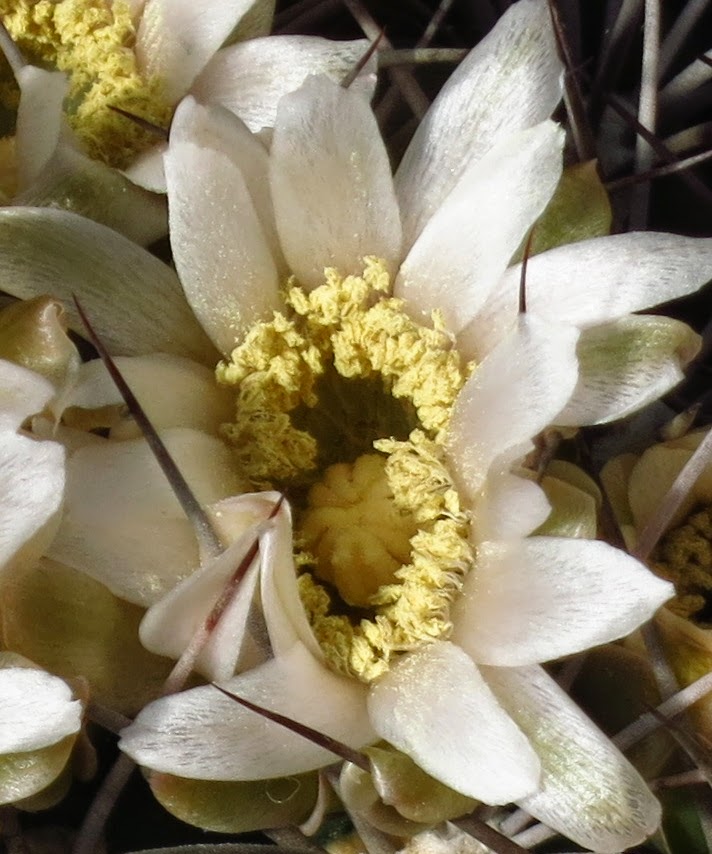

This one has its pollen laid out invitingly on its long thin "tongue" so the bees really don't need to go to any trouble at all.


More spininess - the familiar prickly pear has beautiful flowers, like satin.
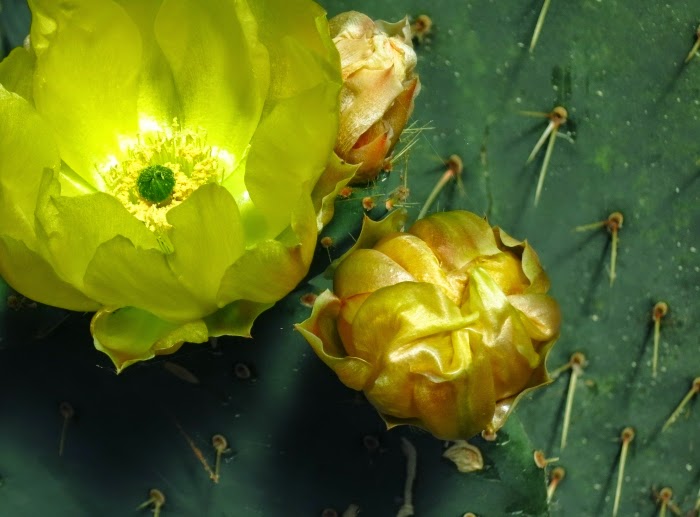

And I like this cactus, too, with all its radial patterns.


What a contrast is this ethereal grass, waving in the breeze outside


And here is a little pond, reflecting a display of California poppies


There is a collection of orchids at Kew, and this curious little specimen reminds me irresistibly of a gnomish little bad fairy in a party dress which is too big for her.  She even seems to have green and black wings. 


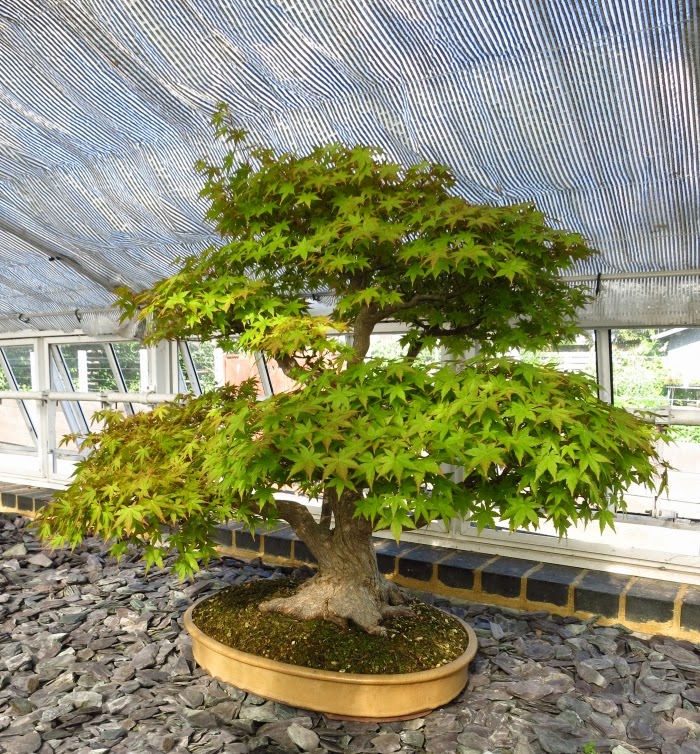
I do like bonsai, so was impressed with this unusual Japanese maple, which is 100 years old and was grown by a Japanese master bonsai cultivator.

Finally, here's another shot of that lotus because I just can't leave it out.  To my way of thinking, lotuses are perhaps the most beautiful and mysterious flowers. 


Thursday, 10 July 2014

Unexpected Kew

I am on the move so not visiting everyone's blogs as much as usual, and I can't sort out a problem with comments either -grr! But .I will do it on my return and meanwhile here's a post I drafted just before I left about a few unexpected aspects of those famous botanical gardens at Kew. 


Like  this goose with absolutely no sense of privacy has laid her eggs in the flower urns on the border of the great lake by the Palm House. About the busiest imaginable part of the Gardens, but perhaps she was inspired, in her little bird brain, by the sight of the egg like decoration all round the urn. They are about the size, shape and colour of her own eggs! You'll see the gardeners have put a barrier round her, with instructions to the public not to disturb her. But really she seemed perfectly unfazed.


There are usually special events and artistic things going on in Kew - I think they aim to make it worthwhile to spend the day there with the family.  I couldn't for the life of me work out why they had given this tree a wonderful crocheted coat (below), but this little fellow was most delighted with it.


And this little girl loved the wooden sheep and her baby lambs.


Now I do know what this (below) is for. It's about choosing how much funding to give various areas of medical research involving plants. It's a way of voting. You choose a strand of wool in the colour that corresponds with the area of health you think should be prioritised for research, and tie it on the vine tree.


It is highly unscientific, but does look pretty.  I think I voted for antibiotics research.

For as long as I can remember, the big building you can see in the background of that goose picture at the top, was called the Wood Museum. I could never figure it out (you will notice I am not very good at figuring out things at Kew).  It was always interesting in a Victorian sort of way, and reminded me of the Pitt Rivers museum in Oxford, in the days when Pitt Rivers was truly dusty and forgotten.

Now, the Wood Museum has become a museum of Kew Gardens' collection of the things you can make of plants, and contains all kinds of intriguing Victoriana. Some of the collection is pretty old, but new exhibits are always being added, and it's an important resource for researchers. I was captivated by a model made by Rakkal Chunder Pal in India in 1886, showing an indigo dye works in all its intricate, realistic detail, from the ox-carts carrying the indigo plants to the works. You see the men carrying them up to the racks to dry


After several other processes, these poor fellows have to stand in the indigo up to their waists and beat the mixture with their paddles.


It's a huge model, and really deserves a whole post, because it's large and indigo dye making is an intricate process ... but hopefully you will get there yourself one day and manage to see it all.


These are earrings, created from some little seeds called Job's Tears, and what seems to be some form of yarn. The accompanying notice said that the Royal School of Needlework was helping conserve many of their more fragile items, like this.  I was particularly intrigued by a 19th century Japanese vest made of mulberry paper, but unfortunately I couldn't get a good shot as the museum is quite dark.

I found these porcelain false teeth, set in india-rubber, most fascinating.  I wonder when dentists stopped calling themselves "surgeons."

The exhibition looks to be permanent, and so I hope to revisit next time I go to Kew and look at it all again - it repays close examination.  But it was getting near to closing time when I left, and I took a rather remote woodland path around the side of the gardens just to see the student show gardens.  And I met this blocking my way, standing in the middle of the path.


I've never met a peacock in a wood before.  It didn't exactly seem scared of me but after we looked at each other, it decided to make a detour through the long grass instead of continuing along the path.. 

What a wonderful thing to meet in a wood!

And of course in between seeing this stuff I also saw any number of amazing plants. That's what Kew is all about, and my next post will show some of the most picturesque and interesting.

Blog Archive