Showing posts with label Gerald Durrell. Show all posts

Sunday, 27 January 2019

Jersey - mostly Wild.


If you have been wondering why I haven't been commenting on blogs for a while, I've been on the island of Jersey, and just too darn busy, falling into bed tired out each night.  I'm still researching this book about Gerald Durrell.  Jersey is where he founded the Durrell Wildlife Preservation Trust and zoo. The Trust does lots of wonderful work abroad protecting highly endangered animals and, equally importantly, restoring their habitats. What's more, some particularly rare creatures have been returned to Jersey and bred in captivity, just to keep the species going.   This is all part of a much larger and even more fascinating aim of re-creating ecosystems, in which every creature has a part to play - but more of that another time. 

The zoo is a lovely landscaped wildlife park in the grounds of an ancient manor house, with lots of different types of enclosures designed for the creatures' wellbeing.    It's highly specialised, keeping only rare animals, and so I thought you might like to see some of those that caught my eye.  

My favourite bird was probably the Palawan Peacock-Pheasant, polyplectron napoleonis.  It is hard to convey how beautiful it is,  its tail looks as if it was designed by William Morris and its feathers are deep blue iridescent and seem to shine in the dark.  It lives only on an island off the Philippines and although it is supposed to be protected, a lot of its forest habitat is leased to loggers, and the birds are extremely threatened.    


I was intrigued by the bird below, even though it's not as rare as the peacock-pheasant.  It's a hamerkop, from South Africa and Madagascar, and is the only member of its genus which has not become extinct.  Personally I think it looks a bit prehistoric.  Since it was  a dark day and it was in a shady compound, I couldn't get a good picture, but this photo, from www.africanbirdclub.org will show you how odd it looks. As a result of its strange appearance, many people consider it uncanny, which protects a bit from being hunted in the wild.   


The zoo has an excellent reptile house,  where I saw some of the rare creatures saved in Mauritius, most of them a little dull looking although it is crucially important to stress that they are every bit as  important as more colourful creatures, because the whole of nature is a system in which everything has an important part to play. 

I liked this blue poison dart frog, Dendrobates azureus, (not from Mauritius I might say, but from Suriname.) Its secretions were once used by native hunters to tip their arrows, so the frogs are definitely "hands-off" for visitors.   Their shiny skin looks somehow like beautifully glazed old ceramic, and it shone as the little creatures hopped around on bright green moss and explored fallen leaves on the ground. 


My photos are mainly blurred because the frogs leap very fast - below is obviously what is meant by "going a blue streak..."


The photo below is of a splendid Andean Spectacled Bear.   It's South America's only bear, and its diet is mostly vegetarian. It was scooping something out of the river with its paw, and I was mesmerised by the rippling of its glossy black fur as it moved.   It did make me want to stroke it although needless to say I didn't try... 


And here was another, climbing a tree.  It had previously entertained me greatly by climbing up a supposedly bear-proof pole and destroying the little platform at the top with great blows of its claws, then sliding down the pole fireman-style, and strolling away nonchalantly. 


The Golden Lion Tamarins, who are highly endangered creatures from Brazil, also have thick and wonderful fur , but their is the most splendid, burning red-gold, like fire, and they leap around their forest home with grace and speed like flying sparks. 


The ring tailed lemurs below are from Madagascar, one of many sorts of lemurs found there and nowhere else. This pair has long, long stripy tails, and here they are grooming each other. These delightful creatures like to sit in a window of their house in the sunshine when they are not swinging lightly and gracefully through the trees outside, using their extremely long tails for balance.  


I bought a couple in the gift shop for the twins - only plastic, though, and about an inch and a half long. Come to think of it, they are a rather odd colour, but I don't think the twins will either know or care.  


And here, finally are some Chilean flamingoes, who look as if they have just dressed up for the party of the year with elegantly dishevelled feathers ranging from brilliant orange to palest pink.   I think those are red-breasted geese among them but I'm not sure. Whatever they are, they make a wonderful contrast. 


Normally I'd have made time to explore some more of Jersey.  It's one of the islands in the English Channel, but it is much nearer France, in the sea between Normandy and Brittany. Jersey passed under English control in the 13th century, but is a Crown Dependency. and not part of the UK  Most of the places there still have French names which my satnav wasn't too happy with at all! 


 I was staying about half an hour drive from the zoo and was REALLY glad I had hired the smallest possible car because some of the roads (two way, with steep slopes and sharp bends) were tricky to navigate.  Believe me you don't want to be grinding up this in first gear and only to meet a truck coming down! 


I've visited Jersey before and know it has some really quirky small attractions, including a house covered in mother-of-pearl shells, and a full time "sand wizard."  But this time I spent all my time in the zoo...and I selling tickets at the front desk, I did meet a guy called Will Highfield, aka "Jersey Gorilla." 

 Although  he works full time and volunteers a day a week looking after the zoo's gorillas, Will also does a lot of running and plans to run the Jersey Marathon in a gorilla suit in aid of a new gorilla house for the zoo. He's set up all kinds of publicity, ranging from giving free talks to local kids, to persuading local businesses to donate raffle prizes to support his fundraising, to doing fundraising quiz nights.  What a dynamic guy. Who said one person can't do much?   If you can access Facebook take a look here and see how he looks in his gorilla suit. 

I was glad I was staying in a nice hotel.  It was called the Somerville and was really comfortable, a big old house on the hillside, with nice staff and a restaurant and bar with long windows overlooking the bay.  It was a good place to relax after days of hard work and what was (to me) stressful driving. 


 Now, I'm transcribing many hours of interviews, which will take me quite a while. I will be visiting blogs when I can, to see what you all have been doing.

Tuesday, 20 November 2018

Back from Mauritius.

I'm just back from Mauritius - the flight's twelve and a half hours each way, so we are feeling tired. But it is good to be home, even though we loved Mauritius and its neighbour island Rodrigues.   We travelled around a lot and saw so much, including some of the conservation work being done.

 I didn't blog much about this before I went (too busy, too nervous).  But all this is part of my research for a book about Gerald Durrell and Mauritius.  The island meant a lot to him and the intervention he planned with huge care thirty five years ago has been quietly developing and flourishing.

One result is the saving of five species of birds, birds so close to extinction that they were down to 12 or fewer individuals. There are other notable successes too, which make Mauritius a pretty remarkable story. 

Anyway, I talked to many people in Mauritius, went into protected wildlife areas and had some memorable experiences, like being in the middle of the forest surrounded by some of the birds that everyone thought would be extinct by now.  These are two pink pigeons...

]
and these are echo parakeets, the only native parrots left in the whole of this section of the Indian Ocean. They are a cousin of the Indian green parakeet but quite different from them in many ways. 


Part of the rescue strategy for these birds is to release them into the wild, and also supplement their diet while their numbers continue to build. This keeps them wild but gives them the best chance to reproduce and thrive.   A bit like we feed birds in the garden, I suppose.   

Apart from having several expeditions with naturalists, exploring the island and meeting up with some old friends who live on Mauritius, we also visited Rodrigues island. You reach Rodrigues by a small turbo prop plane which buzzes over the ocean for an hour and a half,  finally landing at an airport where very free range chickens roam about.


Rodrigues is part of Mauritius but has its own assembly, a bit like Scotland or Wales in relation to England. It is said by many mainland Mauritians that Rodrigues is like Mauritius was 30 years ago, laid back, easy going and unsophisticated.  Most of the population is descended from African slaves, and they're noticeably charming, friendly and public spirited compared with almost anywhere else I've been.  And although they might not be considered sophisticated, they certainly seem to have their heads screwed on about looking after their very special island. So far they've stood out against the building of luxury hotels and resorts, they've rejected the polluting fish farms that are now being planned in mainland Mauritius.

It was clean, it was safe and many of the local people live in traditional ways. Here are some of them gathering seaweed to use as fertiliser.  The time was 7 AM, and they were already hard at work before it got too hot.  Since Mauritius is in the tropics, by 11 AM the sun is directly overhead and anyone with any sense then goes home. 


 Now, back in London in November, it's time for me to start transcribing some of my interviews, preparing for more interviews (in Jersey and the West of England early next year) and also get down some of my personal impressions of Mauritius and Rodrigues before I forget.

Tuesday, 23 October 2018

Marching, Music and Mauritius

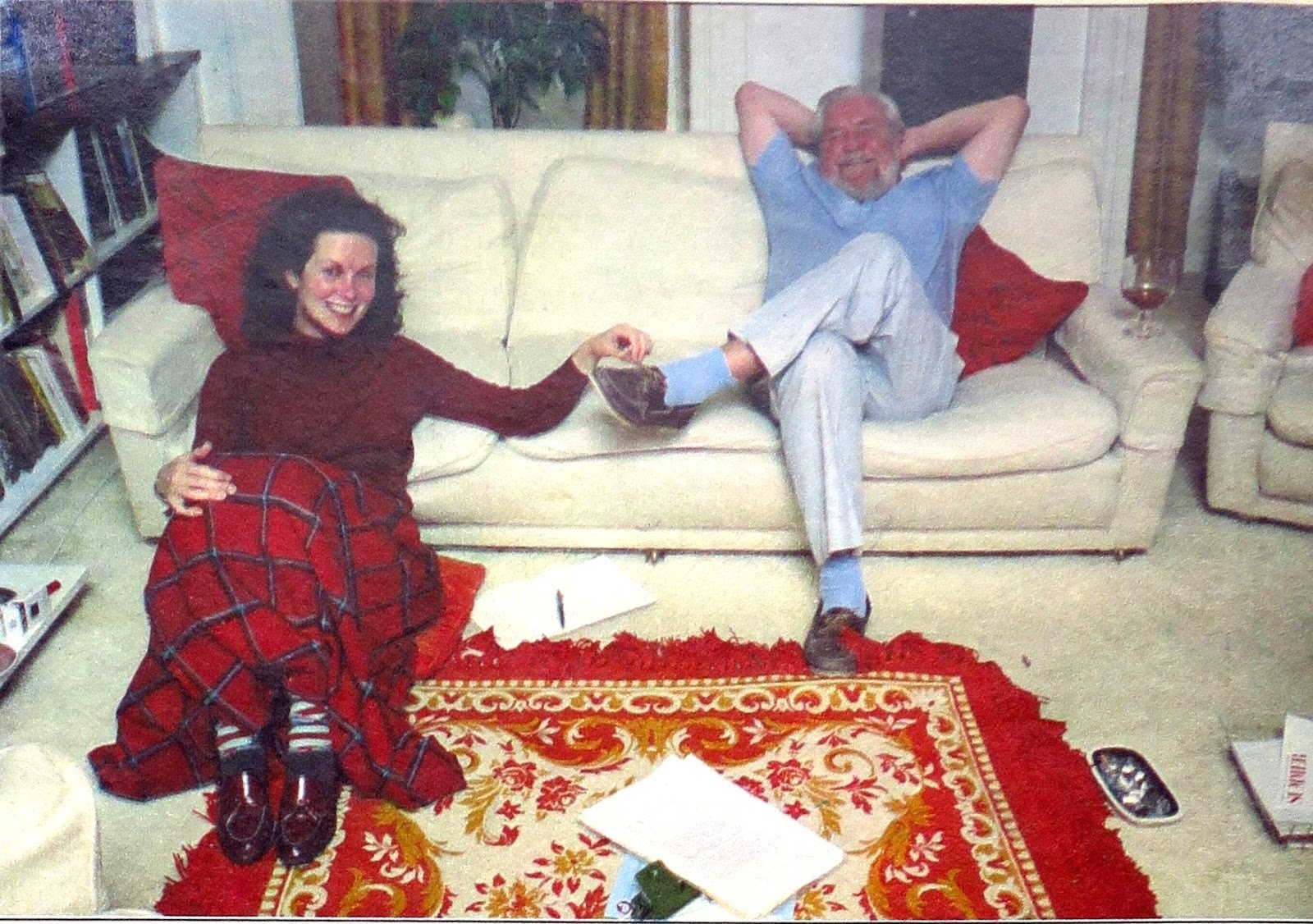
So, continuing to research Mauritius and its wildlife, I have been going through the transcripts of several interviews I did with the conservationist Gerald Durrell, who you will probably know either through his books or through the  TV series "The Durrells of Corfu."  Here is a photo of him and his wife Lee which accompanied one of my articles. I think this picture conveys what good company he was.  


Mauritius and its wildlife fascinated Durrell.  When the remote Indian Ocean island was discovered in the 17th century it was uninhabited by man and full of extraordinary animals and plants that had evolved in isolation, almost like the Galapagos. Unfortunately, human beings arrived in Mauritius before anyone had heard of conservation, and so now only fragments remain of the original wonderful plants, birds, animals and reptiles. Durrell used the Dodo, the island's most famous extinct bird, as a symbol of Durrell Wildlife Trust and the zoo which he founded in Jersey. And very good work is now being done in Mauritius to conserve and re-wild ecosystems that are left.

Sadly, Durrell died in 1995.  The transcripts provided quotes for my articles, but most of them have never been published. Reading through them again after all these years, I often laughed out loud - he was so witty. I've also some found some more unexpected treasures. During one interview he mentioned a piece of music, since our interview was being held within sound of church bells ringing the changes, very loudly and very distractingly, outside.

I didn't look the music up at the time, but this time I did, and here it is!  It's called The Bells of St. Genevieve. It was written in 1723 by the French composer Marin Marais, who was being driven totally mad by his local church bells in Paris, and needed to write the piece to get his head straight.    I love its powerful hypnotic sound. What do you think?


Apart from spending hours on Durrell and Mauritius, I went on the People's Vote March in London last Saturday with various members of my family, including my cousin who came down from Rutland. 

What an incredible march it was.  I go on very few marches, but this reminded me of the march against the Iraq War, - the huge numbers of people were packed side by side across all four lanes of Park Lane and hardly able to move because more and more came flocking in.  When we finally reached Piccadilly - after two hours - the crowds stretched front and back as far as the eye could see.  

I took lots of photos but as the nearby Rinky Dink Bicycle Powered Sound System launched into another number, my camera was drawn to the dear little girl on the left who is one of the people I remember best from the march.


  Her joy and pleasure were infectious. 
   

 It was great the way that so many workers in nearby shops and cafes and street vendors waved at us, and even staff in the department store where we went to have a coffee afterwards, gave us the thumbs up when saw our badges.  Even the busker in the tube on the way home was covered in stickers advertising the march!   

Truth is that most people in Britain, whatever their views on Brexit, are exhausted and horrified at the way it is going, and many people just want to forget it.  So it was wonderful to see that folk of all ages, old, young and even disabled people on walking frames or in wheelchairs,  made the effort to come, not only from Britain and Ireland but also from further afield. I spoke with English citizens that had travelled that day from both France and Holland. They said they were not allowed a vote in the original referendum yet their lives are being turned upside down by Brexit,

 Revised numbers are that about 700,000 people turned up and nobody we met or saw in that huge crowd was angry or nasty, the weather was beautiful, the music was good,and the atmosphere was great, so, even though it's a very serious topic, we all agreed it was a fun day that we will remember for years.  

Blog Archive